
June 6, 2026 · Part 2 of 5 — “The ISS in Crisis”
I want you to picture something.
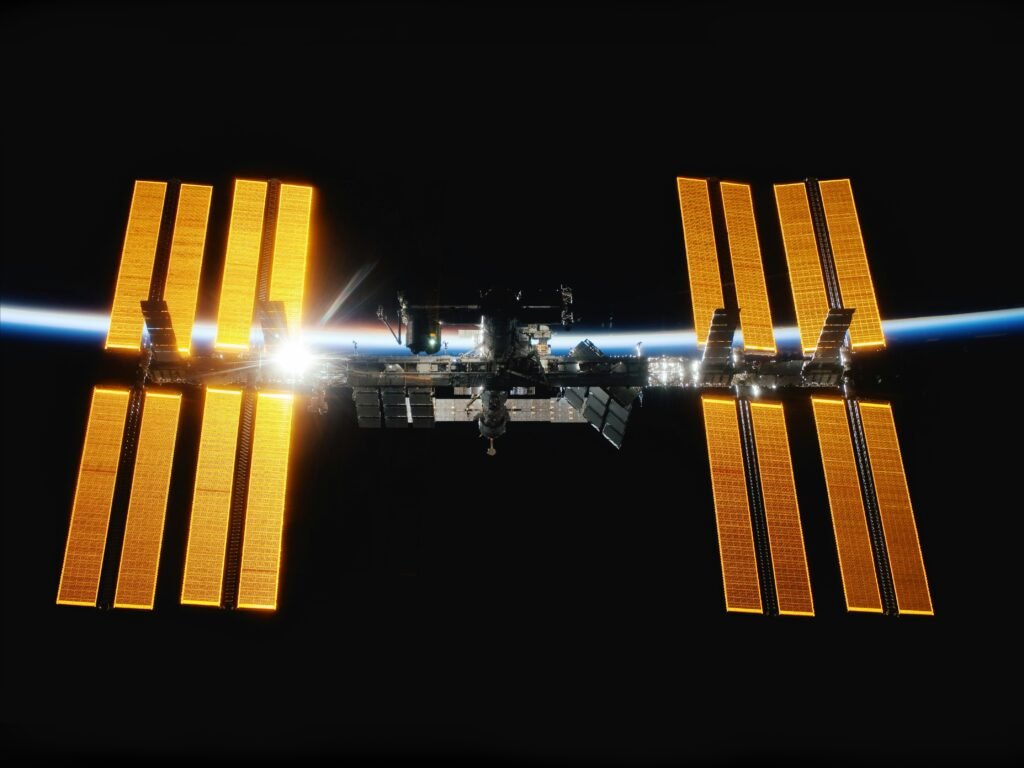
It’s 2021. You’re on the International Space Station — arguably the most complex machine ever built by human hands, a $150 billion laboratory assembled piece by piece over thirteen years in low Earth orbit. And you’re hunting an air leak.
How? With tea leaves.
Not a joke. Cosmonauts actually floated tea leaves through the Zvezda module and watched which way they drifted, because the crack was too small to see, and the area around it was too cluttered with pipes and brackets to get a proper detector in there. Where the leaves pulled, air was escaping. That was the diagnostic tool. Tea. Leaves.
I keep thinking about that image whenever someone asks me if the ISS is fine. Because that moment — that very human, very improvised, slightly absurd moment — is more honest about the last seven years than any press release NASA has put out.
Last Friday, five astronauts were ordered into spacesuits and packed into a docked escape capsule while Russian engineers tried, again, to fix a leak that’s been there since 2019. The crew was back to normal operations within the hour. But the leak? Still there. Still being worked on. Still not solved.
Pull up a chair. This one goes back a while.
The tunnel nobody thought about until it started killing the vibe
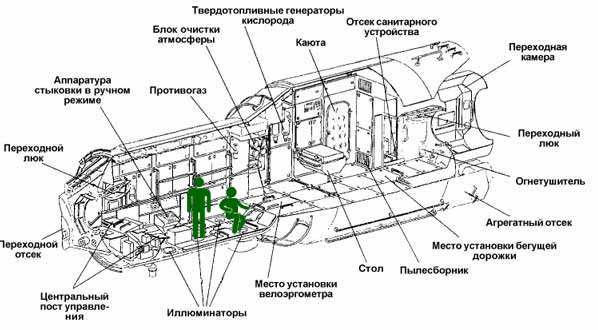
Quick geography lesson, because you need to understand what is actually leaking.
The ISS isn’t one thing. It’s a string of modules from different countries, assembled over more than a decade, held together in orbit like a very expensive piece of furniture built by several people who read different instruction manuals. The Russian end of the station is anchored by a module called Zvezda — launched July 2000, been up there ever since, getting older every single day just like the rest of us.
Zvezda is the backbone of Russia’s segment. Living quarters, propulsion, life support. It’s also home to a small connecting passageway at its far end — the PrK, or transfer chamber — basically a corridor roughly the size of a wardrobe closet, linking Zvezda to one of the station’s docking ports. Soyuz crew ships use it. Progress cargo ships use it. Scientists and mission planners almost certainly never lost sleep over it.
Until they did.
The PrK was manufactured in the 1990s from aerospace aluminum. It’s been sitting in space for 25 years, heating up and cooling down every 90 minutes as the station laps from sunlight to shadow. Over and over and over. Hundreds of thousands of times. Metal fatigues. Welds crack. It’s not a scandal — it’s material science. But understanding that doesn’t make the consequences easier to manage.
September 2019 — the first weird reading
It started as a number that was slightly wrong.
Pressure sensors in the station flagged a small anomaly. Not scary, not dramatic — just a reading that didn’t quite make sense. The crew began running through the standard search protocol: ultrasonic detectors, checking window seals, moving from module to module looking for the source. NASA astronaut Chris Cassidy, who was on board, started posting about the search on social media. At one point he wrote: “So far no luck finding the source.” He sounded less like an astronaut and more like a homeowner trying to figure out where the draft is coming from.
They couldn’t nail it down. Not that year.
It wasn’t until August 2020 that engineers officially confirmed the source was in the PrK tunnel — hairline fractures in the hull, invisible without instruments, surrounded by hardware that made access a serious challenge. The initial plan wasn’t to fix it so much as contain it. Close the hatch, limit the bleed, monitor the numbers.
Then in October 2020 a cosmonaut put tape over one of the cracks. The leak rate halved.
Tape. On a space station.
I’m not saying this to mock anyone — that tape almost certainly bought meaningful time. But at this point in the story, you’re two months from launch of America’s first crewed SpaceX Dragon mission, and the space station it’s flying to has a crack sealed with tape. That feels like information.
2021 — tea leaves and a growing split
The tea leaf episode happened somewhere in this window, and I promise I’ll stop bringing it up after this. But it matters not just because it’s memorable — it matters because of what it tells you about the problem’s difficulty.
The suspected leak sites were surrounded by equipment. The cracks were below naked-eye visibility. Standard inspection tools didn’t fit. So the crew improvised: thin paper strips to watch airflow, tea leaves to visualize current patterns. Old-school physics in a place where old-school is often the only school that fits.
More cracks got found. More got patched. And NASA’s Office of Inspector General issued its first formal report on the problem, flagging it as an ongoing concern. The Aerospace Safety Advisory Panel began getting regular briefings. In NASA terms, this meant: we are taking this seriously, we have a paper trail, and we are watching.
What nobody could crack — no pun intended — was the why. American and Russian engineers looked at the same module and came out with different theories on root cause. Thermal cycling? Micrometeoroids? A manufacturing issue dormant since the 1990s? No consensus.
And that mattered more than anyone was saying out loud. If you don’t agree on why the cracks are forming, you can’t agree on whether more are coming, or how fast, or what stopping them would actually require. The technical disagreement planted a seed of something that would grow into a real problem between the two agencies.
2022–2023 — welcome to the “it’s manageable” era
For roughly two years, the story plateaued into a low-grade, persistent headache. The hatch to the PrK stayed shut most of the time. About a pound of air a day was bleeding out — bad, but within what the station’s systems could handle. The word everyone kept using was “manageable.”
Robyn Gatens, who ran NASA’s ISS program, told the NASA Advisory Council the leak was manageable. She wasn’t wrong. But she also acknowledged, almost in passing, that “there’s a concern any time a structure is leaking.” Hard to argue with that.
Behind the curtain, the gap between NASA and Roscosmos was getting wider. Bob Cabana, chair of NASA’s ISS Advisory Committee, would eventually put it plainly: the American and Russian technical teams had no shared understanding of what the root cause was or how bad things could actually get. Russia’s read was: we can monitor this, we can seal it before it becomes a real problem, catastrophic failure is not on the table. NASA’s read was: we are less certain about all of that than you are.
The gap wasn’t just technical. It was about what “safe enough” means. And they’d never formally agreed on a number — a leak rate at which the situation would become officially unacceptable. Two agencies. One space station. No agreed definition of “too much.”
You can see where this is going.
February–April 2024 — it stops being manageable
In February 2024, NASA ISS Program Manager Joel Montalbano told reporters the leak rate had doubled. Two pounds a day, roughly. Bad enough on its own. But then in April the numbers came in from the OIG: the leak had hit a new peak of 3.7 pounds per day.
That’s nearly 1.7 kilograms of air. Every 24 hours. Through cracks you couldn’t see.
Think of it this way: the station was losing the weight equivalent of a large bag of sugar in air, daily, through invisible fractures in a module that dates back to the Clinton administration.
NASA’s response, in May and June, was to do something it had never done before with this particular problem. It rated the PrK leak at Level 5 on its internal risk management scale — the ceiling, meaning both the odds of something going badly wrong and the severity of it if it did were now ranked at maximum. Publicly: “no immediate threat to crew.” Internally: this is officially the station’s biggest safety risk.
The September OIG report formalized it. And buried in that report was a line I genuinely could not stop reading: after five years of monitoring and multiple repair attempts, NASA and Roscosmos had still not agreed on the leak rate at which things would become “untenable.”
Five years. Maximum risk rating. No agreed threshold for emergency.
Late 2024 and early 2025 — okay, this might actually be working
Credit where it’s due: both agencies stopped treating this like background noise and got serious. Through the second half of 2024, cosmonauts ran more aggressive repairs — real sealant compounds applied to the worst areas, a more thorough job than previous attempts. By late 2024 the leak rate had dropped by about a third. By December it was back down to roughly one pound a day. By January 2026, the readings had stabilized.
People started using the word “stabilized.”
Sergey Krikalev from Roscosmos, at a press conference in August 2025, confirmed the leak was reduced — but not gone. Still being worked on. Root cause still under investigation. The honest version: the patient was doing better, but nobody had actually figured out what was wrong with them.
Still. After years of creep in the wrong direction, any good news felt worth acknowledging. Maybe they’d turned a corner.
May 2026 — oh no
May 1st. Cosmonauts unloading cargo from the Progress 95 ship. Sensors in the PrK picking up something familiar — a pressure signature they’d seen before, starting small, losing ground slowly.
It was back.
By early June the daily loss had climbed to two pounds again. Roscosmos put together a plan: repressurize the PrK, locate the new points of failure, seal them. Reasonable. Logical. Scheduled for June 5th.
Here’s the dark comedy of it: the act of pressurizing the tunnel — the first step of the repair — is precisely what revealed how much worse things had gotten. When engineers pushed air into the PrK to do their measurements, they found not one new leak. Two.
June 5, 9:04 a.m. Eastern — five people in a very small capsule
NASA’s press secretary Bethany Stevens put it diplomatically: “Out of an abundance of caution,” the agency directed all four Crew-12 members and astronaut Chris Williams to “assume an elevated safety posture” inside the docked Dragon spacecraft.
Translation: spacesuits on, strap in, be ready to leave.
The SpaceX Crew Dragon they crammed into is 13 feet wide. Five people. Ready to undock from the station if things went sideways.
One of the two new leaks got sealed quickly. Roscosmos then paused — stopped the whole operation to take more measurements and figure out what was actually going on before proceeding. About an hour after the shelter order went out, the crew was cleared to head back inside and resume normal operations.
So: technically fine. Crisis averted. No one hurt.
Also: year seven of an unresolved structural problem. Still not fixed. Still no agreed-upon endgame.
What happens next, realistically
The ISS has a deorbit date somewhere around 2030. Possibly 2032 if they push it. Either way — this station has maybe four years left. The PrK has been leaking for seven.
The realistic options are: keep patching and hope the sealants outlast the station’s operational life, or permanently seal the PrK hatch, which means losing a docking port that Russia actively uses for crew and cargo missions. Neither option is clean. Neither has been formally chosen.
What gets me about this whole saga — more than the engineering, more than the geopolitics — is the stubbornness of the problem against the backdrop of everything the ISS actually represents. Two countries that have been increasingly at odds for years, still sharing a space station, still arguing through translators about weld integrity and risk thresholds and what “untenable” means in both English and Russian.
It’s remarkable, honestly. Not in an inspiring way, not in a catastrophic way. Just in a very human, very complicated, this-is-actually-how-things-work way.
The ISS is 25 years old. Bits of it are held together with sealant and, at one point, tape. Five astronauts spent an hour in a capsule last Friday waiting to see if they needed to go home.
And right now, somewhere in that tunnel the size of a wardrobe closet, air is still slowly finding its way out.
Next: Article 3 — fixing leaks at 400 km altitude is nothing like fixing them on Earth. Here’s why.
Sources: CNN, Space.com, NASA OIG Report IG-24-020 (Sept. 2024), SpaceNews, Newsweek, The Register, ZME Science, Hackaday, Aviation24, SpacePolicyOnline

