The Hidden Environmental Cost of Deepfake Videos: Why Synthetic Media Isn’t Just a Social Concern
 MuhammadSalis
Beyond ethics and misinformation, deepfake video generation carries a significant environmental footprint. From electricity to water use in giant data centres, here’s what you need to know.
The Rise of Deepfakes and Their Wide-Reaching Implications
Scroll through your feed and you’ll likely spot one: a hyper-realistic video featuring a celebrity speaking words they never said, or a historical figure seemingly revived and placed in a strange new context. These are deepfakes — synthetic videos created using artificial intelligence (AI) tools that are becoming ever more convincing.
Platforms like Sora and others have surged in popularity, allowing users to generate such content quickly. In one recent week, Sora was downloaded over a million times in under five days. These apps have sparked controversy — including pleas from the families of deceased public figures (such as Martin Luther King Jr.) who have asked AI firms to prevent the misuse of their likenesses.
So yes, the ethical, legal and societal issues around deepfakes are well-documented. Yet one element gets far less attention: the environmental cost of creating and distributing synthetic media on a massive scale.
Why Deepfakes Leave a Real Footprint
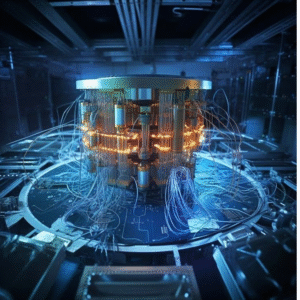
It may seem that generating a video in an app is effortless, but behind the scenes a massive infrastructure powers it all — namely data centres, powerful graphics processors, cooling systems, and enormous energy supply chains.
One expert, Kevin Grecksch (lecturer at University of Oxford), recently highlighted that creating deepfakes isn’t happening on your smartphone alone — the computation is largely done in data centres somewhere in the world. He emphasised that this uses a lot of electricity and a lot of water.
Power, Water and the Invisible Costs
1. Electricity & carbon emissions
The computational demands of generative AI (which underpins deepfakes) are growing fast. According to MIT News, the energy required for inference — the process of creating output from models — is set to dominate AI energy use. MIT News+2arXiv+2 Some estimates suggest that data centres and AI workloads already contribute 2.5–3.7% of global greenhouse-gas emissions. All About AI
2. Water for cooling
Data centres generate enormous heat and use vast quantities of water to cool their systems. For example, the Environmental and Energy Study Institute (EESI) states that a medium-sized data centre can consume up to 110 million gallons of water per year for cooling. EESI A 2024 UK-government-commissioned report projected AI-driven water demand reaching billions of cubic metres annually. GOV.UK Assets
In one wide-ranging analysis:
- A 100-megawatt data centre might use 2 million litres of water per day. TechRepublic+1
- In the U.S., data centres directly consumed 17 billion gallons of water in 2023, with indirect consumption via electricity generation adding far more. insights.globalspec.com+1
3. Location matters
Many new data centres are being built in water-stressed regions (for example, Texas, Arizona, parts of India) because energy infrastructure or tax-incentives may be favourable there. But this intensifies local competition for limited water supplies. TechRepublic
Linking Deepfakes to Environmental Impact
So how does all this tie back to deepfake videos?
- Every time someone generates a deepfake (video or audio), they are indirectly invoking computing and infrastructure that consumes energy + water.
- Training large models (which make high-quality deepfakes possible) uses huge amounts of electricity and water. One academic study found that for a model trained on trillions of tokens, water consumption reached millions of litres, and carbon emissions amounted to hundreds of metric tons. arXiv
- As deepfake creation becomes more accessible and frequent (via apps and platforms), the aggregate environmental burden grows — especially if many users are generating multiple large-render videos, sharing them, storing them, etc.
- The “invisibility” of these costs means users generally do not consider the resource footprint of each synthetic media clip. In other words: it’s easy to create a deepfake, harder to see what environmental chain it triggers.
Why It Matters — Beyond the Ethics
Typically, deepfakes are discussed in terms of misinformation, identity theft, fraud, or harassment. But focusing only on social impact misses a broader dimension: digital resource consumption.
Here are some reasons it matters:
- Resource scarcity: In drought-prone regions, data centre water consumption can compete with agriculture or municipal supply. The hidden footprint of synthetic media adds to that pressure.
- Carbon/energy budget: If video generation grows massively, the incremental energy demand might undermine sustainability targets for the tech sector.
- Equity and location: Data centres located in regions with weaker environmental regulation may have outsized local impacts — yet users globally share in the benefit without bearing the cost.
- Transparency and accountability: Many tech firms do not fully disclose their water or energy usage by site, making it harder to assess the real cost of digital behaviours. insights.globalspec.com
What Can Be Done: Towards More Responsible Creation
The good news: solutions are emerging. Here are some actions and practices that can help mitigate the environmental impact of deepfake creation and generative-AI more broadly:
- Model efficiency: Developing and deploying smaller, more efficient AI models for inference (less energy, less heat).
- Server cooling innovation: Using closed-loop or liquid-cooling systems rather than open evaporative cooling to reduce water use. EESI
- Location strategy: Building data centres in regions with plentiful renewable energy and water availability, and avoiding drought-prone zones.
- User awareness: Educating creators that even digital media has a “back-end cost” and encouraging moderation in usage.
- Transparency & reporting: Governments and companies should require standardized disclosure of water and energy usage for data centres and AI workloads. The UK report calls for such regulation. GOV.UK Assets
- Policy frameworks: Integrate data-centre resource demand into urban and environmental planning, especially in places designated as “AI growth zones.”
Deepfakes: The Media Side and the Environmental Side
Let’s look at deepfakes through two lenses:
Media/ethical lens — Deepfakes challenge trust in what we see and hear. They raise questions of consent, authenticity, and manipulation.
Resource/environmental lens — Deepfakes, especially at scale, generate hidden resource use: electricity to run GPUs, water to cool them, land & materials for data centres, and carbon for power generation.
Both lenses point to the same conclusion: deepfakes are not just a social or technological phenomenon — they are also an environmental one.
Key Takeaways
- Generative AI and synthetic media tools (including deepfakes) rely on large-scale infrastructure — data centres with high energy and water demands.
- Research suggests data centres already consume billions of gallons of water annually; the rise of AI could double or more that usage. theoutpost.ai
- Users of deepfake tools rarely see or account for this hidden cost.
- ~“It uses a lot of electricity and it uses a lot of water,” as Dr. Grecksch puts it — and that point deserves more attention.
- Sustainable digital creation means thinking not just about “what can be created” but also “what resources it uses.”